
Assalamu Alaikum,
Welcome to Issue #4 of MYCOE Retail Matters.
The market is flat. Consumer wallets are squeezed. The rand is under pressure. And yet — some brands are growing. Not because the economy turned. Because their strategy was sharper.
This week, we look at what separates the retailers who take share from the ones who give it away — and what it means for how you run your business right now.
THE BIG SHIFT: Growth in a Flat Market Is Taken, Not Given

In 2025, New Balance grew 19 percent — to $9.2 billion — in a market that was not growing.
That growth did not come from a rising tide. It came out of someone else’s pocket. While Nike doubled down on Direct-to-Consumer and pulled back from wholesale, New Balance stepped into the shelf space that was left behind at Foot Locker, Dick’s Sporting Goods, and physical retail everywhere discovery still happens.
That decision alone shifted market share. But distribution was only one lever.
The younger consumer is not loyal to logos. They are loyal to relevance. The 90s retro wave. The chunky dad sneaker. Authentic collaborations. New Balance leaned into heritage instead of chasing forced innovation. And because it is a private company, it could build long-term brand equity without the pressure of quarterly results.
The lesson is not about sneakers. It is about what happens when a competitor overcommits to one channel and abandons another. There is always an opening.
What this means for retailers:
When a larger competitor abandons a customer segment or channel, there is an opening. Move first and hold it.
Loyalty is built through relevance, not just discounting. Know why your customer chooses you — and double down on that reason.
Owning your distribution relationship matters. Retailers who removed themselves from physical presence found it expensive to rebuild.
Full breakdown here: https://www.linkedin.com/in/riad-laher-5b27571b/recent-activity/all/
ECONOMIC SIGNALS

Signal 1 — The Rand at R17/$: Your Import Costs Just Went Up
The rand weakened to R17.20 to the dollar in late March 2026, pushed by global risk-off sentiment driven by the US-Iran conflict and sustained oil prices above $100 a barrel. The Reserve Bank held the repo rate at 6.75% — but flagged multiple rate hike scenarios ahead.
Retail implication: if your business imports any goods, sources in dollars, or carries debt, the rand’s weakness compounds your cost base directly. Every rand of margin you do not actively protect gets squeezed from two directions — higher input costs and softer consumer spending power.
Signal 2 — JSE: Worst Month in 18 Years
South Africa’s benchmark JSE All Share Index fell 14% in March — its worst monthly decline since the 2008 financial crisis. Retailers, banks and construction stocks all fell more than 10%. The mining sector, which accounts for 25% of the index, dropped 27%.
Retail implication: investor sentiment shapes credit availability, property costs and consumer confidence. A falling equity market does not stay contained to the investment class. When wealth shrinks, spending follows. The customers most likely to downgrade their basket or delay purchases are the ones watching their investments fall.
See full outlook: https://businesstech.co.za/news/finance/855253/worst-month-for-south-africa-in-18-years/
Signal 3 — SA Investment Conference: R17.6bn from Coca-Cola Signals Long-Term Confidence
Against the pressure signals, here is the counter-narrative. Coca-Cola pledged R17.6 billion in South African investment at the 2026 SA Investment Conference — supporting expanded production, distribution and innovation. Toyota pledged R10.4 billion. Sasol R60 billion. President Ramaphosa extended the investment drive target to R2 trillion by 2028.
Retail implication: large-scale investment in local production and supply chains means more local jobs, more local spending and more stable input costs over time. This is the structural floor under the economy. Independent retailers who survive the current pressure cycle will operate in a stronger local economy on the other side.
See full outlook: https://businesstech.co.za/news/business/855569/iconic-international-giant-pumping-r17-6-billion-into-south-africa/
RETAIL SIGNALS
Chinese Retail in South Africa Has Entered Its Third Phase
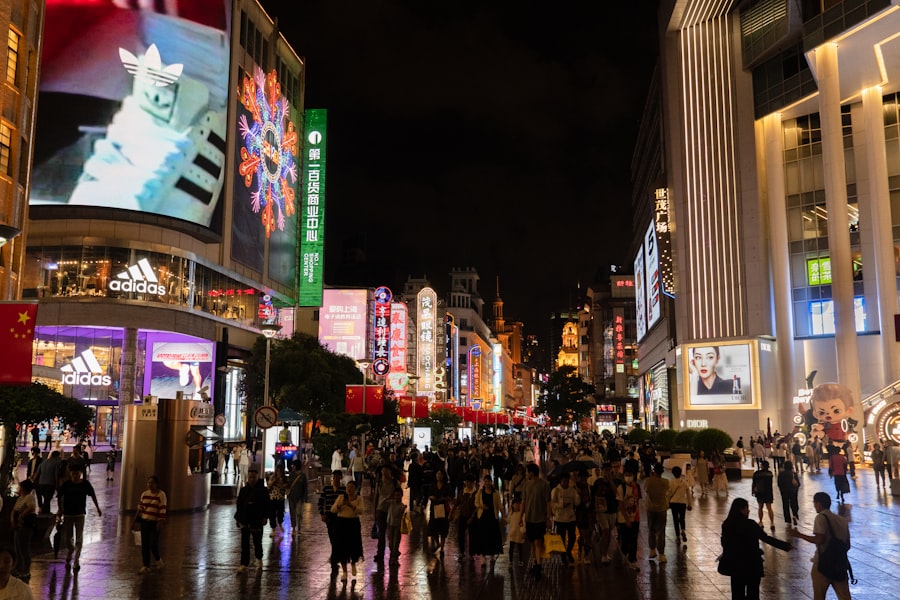
What started with informal traders in the 1980s, then moved through the China Mall era of the 2000s, has now reached formal retail and digital commerce. Chinese brands now hold 3.6% of South Africa’s clothing, textile and footwear market — approximately R7.3 billion annually — through Shein, Temu and increasingly formalised store formats. ValueCo just acquired WestPack Lifestyle to create a 20-store chain. Danny Home is opening standalone stores in premium malls. Panda Stores has converted a former Pick n Pay into a full grocery and lifestyle outlet.
This is no longer informal competition. It is structured, capitalised and scaling. For independent retailers who have not yet adapted their value proposition, the margin on undifferentiated products is being eroded from below.
More signals we are tracking: https://www.linkedin.com/pulse/dragons-ascent-charting-evolution-chinese-retail-south-riad-laher-v8h8f/
Food Manufacturing Consolidation: Premier Acquires RFG in R28bn Deal
JSE-listed Premier Group has finalised its acquisition of RFG, bringing 53 iconic South African food brands under one roof — including Rhodes Quality, Bull Brand, Pakco, Magpie and Hinds Spices, alongside Premier’s existing brands: Snowflake, Blue Ribbon, Impala and Iwisa. The combined group has annual revenue of approximately R28 billion, 47 manufacturing facilities and 28 depots across southern Africa.
For independent retailers: supplier consolidation of this scale typically means stronger wholesale power, more standardised trading terms and tighter shelf space negotiation. Know your brand mix. Understand which of your suppliers just got significantly bigger — and negotiate accordingly.
More signals we are tracking: https://businesstech.co.za/news/business/855567/major-change-for-53-popular-brands-in-south-africa/
INSIDE RETAIL MATTERS
The operators we talk to are making one consistent move right now: simplifying their offer. Not adding products to chase margin — removing them. Clearing slow movers. Protecting the fastest-turning lines. Reducing the working capital tied up in dead inventory.
The businesses that come through this pressure cycle strongest will not be the ones that tried to grow through it. They will be the ones that tightened their model before it was forced on them.
OPERATOR INSIGHT: Speed Is Not the Same as Clarity

There is a habit in retail leadership — and in business generally — to treat urgency as a substitute for understanding. A sales dip comes in. A customer complaint spikes. The instinct is to act immediately. Launch a promotion. Add a new initiative. Hire someone. Change something.
But fast action on incomplete information is not responsiveness. It is noise.
Harvard Business Review calls it the responsiveness trap. You act quickly to prove you are listening — and end up solving the symptom while the cause compounds below the surface. Six months later, the same problem appears again. Because you treated data as a diagnosis instead of a signal.
The retail operators who build durable businesses create space between the signal and the response. They ask: what is actually happening here, not just what does the number show? A slow week in footwear is not a footwear problem. It might be a store layout problem, or a staff scheduling issue, or a localised competitor promotion, or a rent day calendar shift.
Understanding before action. That is not slow. That is smart.
How to apply this: https://hbr.org/2025/03/leaders-consider-pausing-before-acting-on-employee-feedback
RETAIL TOOL: What Zara Actually Built — And What It Means for Independent Retailers
There is a well-known story about how Zara’s founder Amancio Ortega compared fashion to fish. Fresh product sells at full price. Yesterday’s catch gets discounted. Old inventory rots on the shelf.
What made Zara dominant was not the metaphor — it was the infrastructure they built around it. Vertical integration. Twice-weekly restocking. Real-time sales data flowing from every store to head office. A distribution system that could route new product to stores in 48 hours. A design cycle measured in days, not months.
The practical lesson for independent retailers is not “be like Zara.” It is this: the principle of inventory freshness applies at every scale. When you know what is selling and what is not — in real time — you can reorder fast movers before they run out, and clear slow movers before they become a markdown problem. That visibility is the difference between margin and noise.
See how this works: https://www.posibolt.com
PARTNER SPOTLIGHT
Supported by Posibolt

Posibolt is a retail ERP system built for independent multi-store retailers in South Africa. It gives you real-time inventory visibility, purchasing controls, and performance reporting across your entire operation — from a single dashboard.
In a market where the rand is weakening, costs are rising and consumer confidence is compressed, real-time data is not a luxury. It is the infrastructure that keeps your margins protected and your decisions sharp.
CLOSING THOUGHT
The market is not going to rescue your business. The businesses that win in flat or declining markets are not the ones waiting for conditions to improve. They are the ones who have already done the work: tightened their operations, sharpened their value proposition, and built the systems that let them respond quickly when opportunity appears.
Growth in a stagnant market is taken, not given. But it can only be taken by the prepared.
Until next week — keep building with barakah.
Riad Laher
MYCOE Retail Matters
Forward This Newsletter
If someone forwarded this newsletter to you and you would like to receive future editions, subscribe here:
Retail Matters WhatsApp Channel
Join the Retail Matters WhatsApp Channel for more retail insights:
https://whatsapp.com/channel/0029Vb9iIiO9WtBxvjeEoF2G